


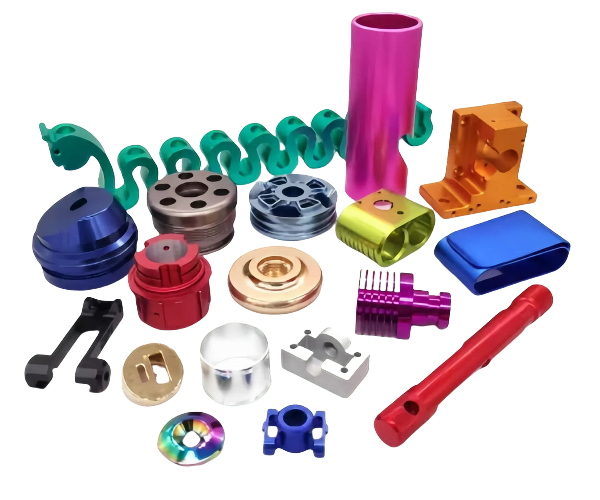
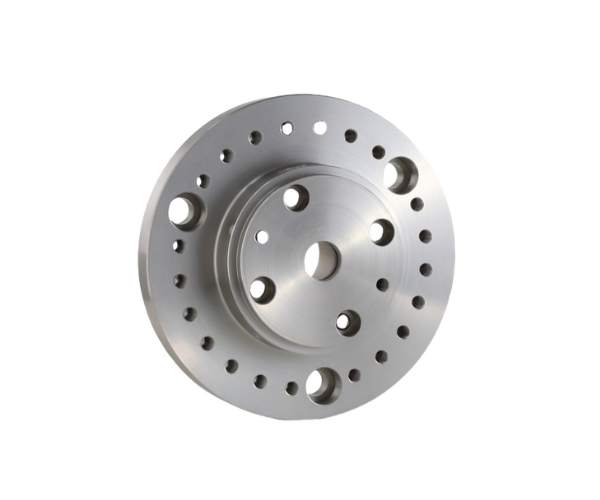
Precision NDT inspection services for aluminum, zinc, and magnesium die castings detecting defects, verifying dimensional integrity, and ensuring your components meet the most demanding industry specifications.

About Our Lab

Die casting is a high-precision manufacturing process but even the most tightly controlled production environments produce castings with subsurface porosity, shrinkage, cold shuts, and inclusions that are invisible to the naked eye. That’s where our non-destructive testing (NDT) laboratory comes in. We deliver a full range of inspection services designed specifically for the challenges of die cast metal components.

Our NDT techniques evaluate the structural integrity, dimensional accuracy, and material properties of your aluminum, zinc, and magnesium castings without altering or damaging them.

Radiographic Testing (RT)

X-ray and digital radiography reveal internal defects in die castings that no surface inspection can detect. We use industrial radiography to identify porosity clusters, shrinkage cavities, cold shuts, and inclusions buried deep within aluminum and zinc alloy castings.
Liquid Penetrant Inspection (LPI)

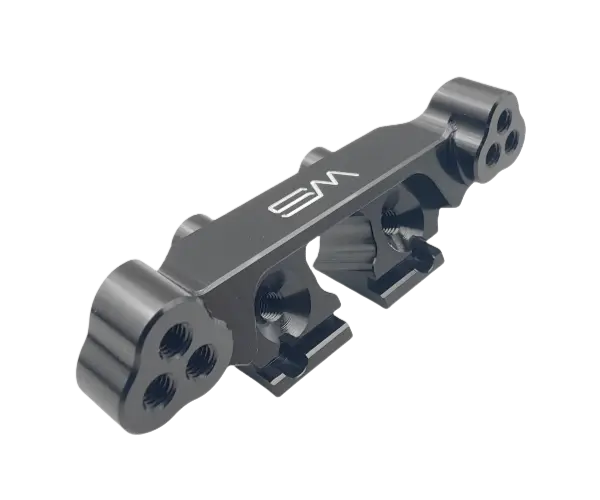
Liquid penetrant testing is one of the most cost-effective and widely applied NDT methods for detecting surface-breaking discontinuities in non-porous die cast components. Fluorescent penetrant inspection (FPI) is particularly effective for identifying tight cracks, laps, cold shuts, and other surface flaws on complex casting geometries.
Magnetic Particle Inspection (MPI)

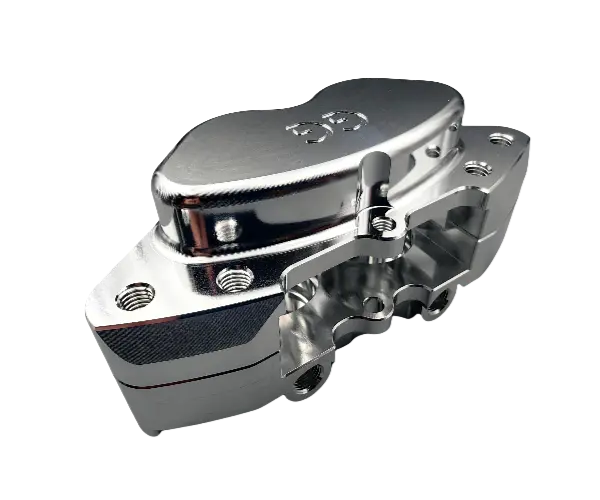
Magnetic particle testing is a highly sensitive method for locating surface and near-surface discontinuities in ferromagnetic die cast iron and steel components. Our lab performs both wet and dry magnetic particle inspection in accordance with ASTM, ASME, and SAE specifications, with full documentation of all indications.

Ultrasonic Testing (UT)

Ultrasonic testing uses high-frequency sound waves to measure wall thickness, detect internal voids, and evaluate bond integrity in die cast parts. Immersion testing and phased array ultrasonic testing (PAUT) offer exceptional resolution for locating subsurface defects across complex casting profiles, making UT one of the most versatile NDT methods in a die casting quality control program.

Eddy Current Testing (ECT)

Eddy current inspection is ideal for detecting surface and near-surface cracks in non-ferromagnetic castings particularly aluminum and magnesium die castings. It's also widely used for conductivity measurement, coating thickness verification, and alloy sorting, making it an efficient method for high-volume production inspection without contact or consumables.

Visual Inspection & Dimensional

Our certified visual inspection technicians evaluate die castings against drawing specifications, customer requirements, and applicable codes. Paired with dimensional inspection using CMM and optical measurement, we deliver complete first article inspection (FAI) and PPAP documentation packages to support your customer approval processes.


Why NDT Is Important

HIDDEN RISKS IN EVERY DIE CAST COMPONENT

Die casting produces net-shape metal components at high speed  but the process physics create predictable internal flaws. Gas entrapment during injection, turbulent metal flow, and solidification shrinkage all contribute to porosity, cold shuts, and subsurface voids

Porosity & Shrinkage

Gas porosity and shrinkage cavities are the most common defects in pressure die castings. Radiographic and ultrasonic inspection quantify their size, location, and distribution against acceptance criteria.

Cold Shuts & Misruns

Turbulent metal flow during injection creates cold shuts linear discontinuities along the casting surface. Liquid penetrant and visual inspection reliably detect these surface-breaking flaws.

Inclusions & Foreign Material

Oxide films, die lubricant residue, and foreign inclusions can weaken castings at critical cross-sections. Radiographic testing identifies inclusions that cannot be seen from the surface.

Surface Cracks & Fatigue

Cracks introduced during ejection, handling, or thermal cycling are detected with magnetic particle and penetrant inspection before components reach assembly or the end customer.

Dimensional Non-Conformance

Die wear, flash, and fill variation all affect dimensional accuracy. Our CMM and optical inspection services confirm component dimensions against engineering drawings and control plans.

USA-Customers-Visit-PartMfg-Facory.webp

Ready to Start

NDT Standards

Our NDT laboratory operates in compliance with the industry standards that govern die casting quality inspection across aerospace, automotive, and industrial markets.

ASTM

ASTM E165, E709, E1444, E505 and related die casting inspection standards

ASME

ASME Section V NDE procedures for pressure-containing components

SAE AMS

Aerospace Material Specifications for NDT of casting and forged components

MIL-STD

Military specification NDT procedures for defense casting applications

Contact us:+1(502)422-1539,whatsapp:+1(502)422-1539

Start Your Project With Rapidoparts

Your Valuable Custom Manufacturing Partner!
From Rapid Prototyping to Production,Quality Parts. Fast. Easy. Affordable.

Scroll to Top

Get a Quote

We will respond to your request within 2 hours. Please email us directly at: sales@rapidoparts.com