


Automotive Die Casting
High-pressure aluminum, zinc, and magnesium die casting for automotive manufacturers producing lightweight, complex auto parts with tight tolerances, high volume, and uncompromising quality.
Request a Quote | Explore Materials

What Is Die Casting In Automotive Industry?
Automotive die casting is a high-pressure metal casting process in which molten metal (typically aluminum, zinc, or magnesium alloys) is injected under pressure into a precision steel mold cavity.
The metal solidifies rapidly, producing complex-shaped automotive parts with excellent dimensional stability, fine surface detail, and consistent mechanical properties at high volume.
Thin walls, intricate internal features, and tight tolerances are achievable in a single casting cycle, drastically reducing the need for post-processing and secondary machining. This helps simplify production processes and improve overall manufacturing efficiency.
RapidoParts operates both cold chamber and hot chamber die casting machines, supported by casting simulation software that models solidification, porosity, and thermal management before the first die is cut, ensuring quality is engineered in, not inspected in.
Die Casting Automotive Parts
Auto Parts We Cast
Powertrain
Engine Blocks
Complex, thin-wall aluminum die cast engine blocks with integrated oil passages and precise bore dimensions.
A380 Aluminum
Powertrain
Transmission Cases
High-pressure die cast aluminum transmission cases with tight tolerances for gear train alignment and fluid sealing.
ADC12 Aluminum
Powertrain
Cylinder Heads
Precision aluminum die cast cylinder heads with complex internal coolant and oil circuits cast in.
A383 Aluminum
Powertrain
Gearboxes
Die cast aluminum gearbox housings for manual, automatic, and EV drive unit applications.
A380 Aluminum
Powertrain
Fan Impellers
Thin-wall aluminum die cast fan impellers with precision-balanced blade geometries for thermal management.
ADC12 Aluminum
Chassis & Structural
Steering Knuckles
High-strength aluminum die cast steering knuckles replacing forged steel, delivering significant weight savings without compromising strength.
A380 Aluminum
Chassis & Structural
Control Arms
Die cast aluminum control arms for suspension systems, offering superior strength-to-weight ratio versus stamped steel alternatives.
Aluminum Alloy
Chassis & Structural
Chassis Brackets
Complex aluminum brackets and mounting structures that simplify assembly by integrating multiple features into a single die casting.
A380 / ADC12
Chassis & Structural
Liftgate Structures
Lightweight aluminum die cast liftgate frames and structural components for SUVs and crossovers.
Aluminum Alloy
Safety Systems
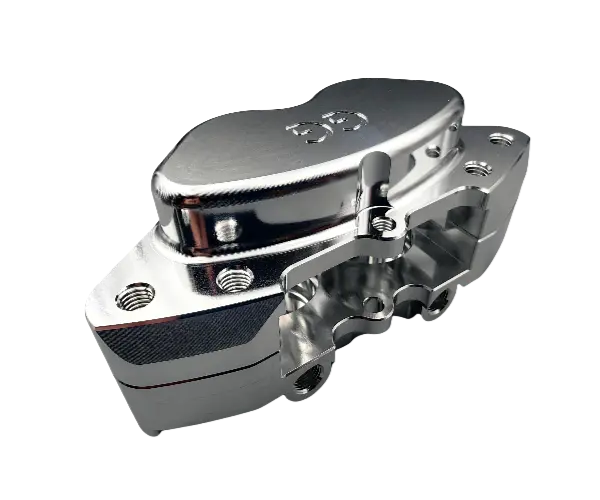
Brake Calipers
Precision aluminum die cast brake calipers with complex internal passages for hydraulic fluid, meeting strict safety dimensional requirements.
A380 Aluminum
Safety Systems
Brake Rotors
High-performance die cast components for brake rotor assemblies requiring dimensional precision and thermal management.
Aluminum / Zinc
Safety Systems
Seat Belt Retractors & Spools
Zinc die cast seat belt retractor mechanisms and spools, offering the precision and consistency that safety-critical components demand.
Zamak Zinc
Safety Systems
Airbag Housings
Precision die cast aluminum and zinc airbag sensor and inflator housings requiring tight tolerances and rigorous quality certification.
Zamak Zinc
EV & Electronics
Battery Housings
Large-format aluminum die cast EV battery enclosures offering lightweight structural protection and integrated thermal management channels.
ADC12 Aluminum
EV & Electronics
Stator Housings
Precision die cast aluminum stator housings for EV drive motors, with complex cooling passages and tight bore tolerances.
A380 Aluminum
EV & Electronics
Heat Sinks
High-conductivity aluminum die cast heat sinks for power electronics and inverters, leveraging aluminum’s natural thermal conductivity.
ADC12 Aluminum
EV & Electronics
LiDAR & Camera Housings
Precision aluminum and zinc die cast housings for LiDAR, radar, and camera sensors in ADAS and autonomous vehicle systems.
Aluminum / Zinc
Interior & Body
Actuator Housings
Compact zinc and aluminum die cast actuator housings for seat adjustment, mirror control, HVAC, and other automotive mechatronics.
Zamak / Aluminum
Interior & Body
Seat Belt Sensors
Precision zinc die cast sensor housings for seat belt tension and occupancy detection systems.
Zamak Zinc
RapidoParts Automotive Die Casting Service
Our facilities run cold chamber and hot chamber die casting machines alongside in-house CNC machining, finishing, and quality control, giving automotive manufacturers a single, accountable supplier for the full manufacturing process.
We combine high-volume production efficiency with the engineering expertise to support complex, tight-tolerance automotive castings, from early design and simulation through serial production.
High-Pressure Die Casting
Cold and hot chamber die casting machines producing aluminum, zinc, and magnesium die cast automotive parts at high volume with consistent dimensional accuracy.
Casting Simulation & DFM
Engineering-led casting simulation software analyzes solidification, porosity, and thermal management before tooling, reducing cost and accelerating launch timelines.
In-House CNC Machining
Post-casting CNC machining achieves tight tolerances on critical automotive part features without the delays and risks of outsourcing secondary operations.
Full Quality & Traceability
In-process dimensional inspection, PPAP documentation, and material traceability supporting automotive OEM quality requirements from APQP through production.
Benefits of Automotive Die Casting
Why automotive engineers and manufacturers choose die casting over alternative metal forming processes, covering everything from lightweighting to design freedom to cost efficiency at scale.
Lightweight Parts Without Compromising Strength
Aluminum and magnesium die castings deliver exceptional strength-to-weight ratio, producing parts up to 65% lighter than steel equivalents. Critical for fuel efficiency in ICE vehicles and range extension in EVs and hybrid platforms.
Complex Shapes in a Single Shot
Die casting produces intricate, complex parts (internal passages, ribs, bosses, undercuts) in one casting cycle. Multiple components can be consolidated into a single die casting, reducing assembly cost and improving structural integrity.
Tight Tolerances & Dimensional Stability
The die casting process achieves tight tolerances and excellent dimensional stability, producing net-shape and near-net-shape automotive parts that require minimal post-processing, reducing cost and lead time.
Types of Die Casting and Vehicle Part Guide
Choosing the right die casting process and alloy depends on part size, complexity, mechanical requirements, and production volume. Here’s how the major types map to automotive applications.
High-Pressure Aluminum Die Casting
The dominant automotive die casting process. Molten aluminum is injected into a steel die under pressures of 1,500–35,000 PSI, producing complex, net-shape parts with excellent surface finish and dimensional accuracy at high volume. Both cold chamber machines (for aluminum and magnesium) and hot chamber machines (for zinc) use high-pressure injection.
High-pressure die casting (HPDC) is chosen by automotive manufacturers when cycle time, part complexity, and volume production efficiency are the primary drivers, making it the process of choice for engine parts, transmission cases, structural chassis components, and EV battery housings.
- Fastest cycle times for highest volume production efficiency
- Complex shapes with thin walls achievable in a single shot
- Excellent dimensional stability and repeatability
- Casting simulation software used to optimize flow and solidification
- Supports aluminum, zinc, and magnesium alloys
Engine Blocks & Cylinder Heads
Transmission Cases
EV Battery Housings
Steering Knuckles
Chassis Brackets
Stator Housings
Heat Sinks & Thermal Parts
Control Arms
| Specification | Value |
|---|---|
| Process Type | Cold Chamber |
| Primary Alloys | A380, ADC12, A383 |
| Injection Pressure | 1,500 – 35,000 PSI |
| Tolerances | ±0.05 mm achievable |
| Wall Thickness | 0.8 mm – 12 mm+ |
| Volume Fit | High volume production |
| Post-Processing | CNC machining, coating |
| EV Suitability | Excellent |
Low-Pressure Die Casting
Low-pressure die casting uses gas pressure (typically 0.3–1.5 bar) to push molten aluminum upward into a die cavity from a sealed furnace. The slow, controlled fill rate produces castings with excellent metallurgical quality, minimal porosity, and superior mechanical properties compared to high-pressure casting.
Low-pressure die casting is preferred when part integrity and mechanical properties take priority over cycle time, making it the process of choice for safety-critical automotive casting applications including wheels, suspension components, and structural chassis parts.
- Excellent mechanical properties with less porosity than HPDC
- Controlled, turbulence-free mold fill reduces defects
- Well-suited for large, safety-critical automotive parts
- Supports heat treatment after casting for enhanced properties
- Preferred for aluminum alloy structural components
Aluminum Wheels
Suspension Knuckles
Control Arms
Subframe Components
Brake Calipers
Structural Chassis Parts
| Specification | Value |
|---|---|
| Process Type | Low-Pressure |
| Fill Pressure | 0.3 – 1.5 bar |
| Primary Alloys | Aluminum alloys |
| Porosity Level | Very low |
| Mechanical Properties | Superior to HPDC |
| Heat Treatment | Compatible |
| Best For | Safety-critical parts |
Zinc Die Casting
Zinc die casting (hot chamber process) uses Zamak zinc alloys with low melting points, enabling fast cycle times, fine surface detail, and tighter tolerances than aluminum in a hot chamber machine. The low melting point of zinc alloys also means lower tooling wear and longer die life, reducing long-run tooling costs.
Automotive engineers choose zinc die casting for small, intricate, precision auto parts where surface finish, dimensional accuracy, and detail are paramount, including safety system components, sensor housings, and mechatronic parts where zinc’s wear resistance and strength are advantageous.
- Tightest tolerances of any die casting alloy
- Excellent wear resistance for moving and mating parts
- Hot chamber machine for fast cycle times at high volume
- Low melting point reduces tooling and energy costs
- Superior surface finish with minimal post-processing needed
Seat Belt Retractors & Spools
Airbag Sensor Housings
Actuator Housings
Door Lock Mechanisms
LiDAR & Sensor Mounts
Fuel System Components
Gear Components
| Specification | Value |
|---|---|
| Process Type | Hot Chamber |
| Primary Alloys | Zamak 3, Zamak 5 |
| Melting Point | ~380°C (Low) |
| Tolerances | Tightest of any alloy |
| Wear Resistance | Excellent |
| Surface Finish | Excellent as-cast |
| Best For | Small precision parts |
Magnesium Die Casting
Magnesium alloys are the lightest structural metal available for die casting, approximately 35% lighter than aluminum and 78% lighter than steel. Automotive manufacturers use magnesium die casting where maximum weight reduction is the design priority, particularly for interior structural components and powertrain covers.
Magnesium die casting is processed in cold chamber die casting machines and is increasingly used in EV and hybrid vehicle programs where lightweighting directly translates to extended battery range. Advanced thixomolding, a semi-solid magnesium die casting process, extends the geometric complexity achievable.
- Lightest structural casting metal, 35% lighter than aluminum
- Excellent wear resistance for moving and mating parts
- Hot chamber machine for fast cycle times at high volume
- Low melting point reduces tooling and energy costs
- Superior surface finish with minimal post-processing needed
Seat Belt Retractors & Spools
Airbag Sensor Housings
Actuator Housings
Door Lock Mechanisms
LiDAR & Sensor Mounts
Fuel System Components
Gear Components
| Specification | Value |
|---|---|
| Process Type | Cold Chamber |
| Primary Alloys | AZ91D, AM60B |
| Weight vs. Aluminum | 35% lighter |
| Weight vs. Steel | 78% lighter |
| EMI Shielding | Excellent |
| Thixomolding | Available |
| Best For | Lightweighting & EVs |
Why Automotive Manufacturers Choose RapidoParts
Automotive die casting demands more than a machine and a mold. It demands engineering expertise, process discipline, and a supplier with the capabilities and capacity to support automotive production schedules, from prototype through the life of the program. RapidoParts delivers all of it under one roof.
One-Stop Manufacturing
Die casting, CNC machining, surface finishing, and quality control under one roof. No multi-supplier coordination, no accountability gaps, no delays between operations.
Engineering-Led Design
Casting simulation software, DFM analysis, and automotive engineering expertise support your program from concept through launch, reducing tooling iterations and accelerating time to production.
Tight Tolerances, High Repeatability
Our die casting process and in-house CNC machining consistently deliver automotive-grade dimensional accuracy, meeting the tight tolerances that engine, transmission, and chassis parts demand.
Green Manufacturing
Reclaimed metal reuse, energy-efficient die casting machines, and recyclable alloys support your sustainability commitments, making RapidoParts an eco-friendly automotive casting partner.
Prototype to High-Volume
We support automotive programs from the first prototype casting through full-volume production, with consistent quality, tooling continuity, and no supplier transition risk as volumes scale.
EV & Hybrid Ready
Battery housings, stator cores, heat sinks, and structural EV components. We've built our capabilities around the lightweighting and thermal management demands of electric vehicle programs.
OEM-Grade Quality Systems
PPAP, APQP, and full material traceability aligned to automotive OEM supplier requirements. ISO-certified quality management systems with in-process dimensional inspection at every stage.

Ready to Cast Your Next Robotic Component?
Send us your drawings or part requirements and we’ll provide a DFM review and quote.